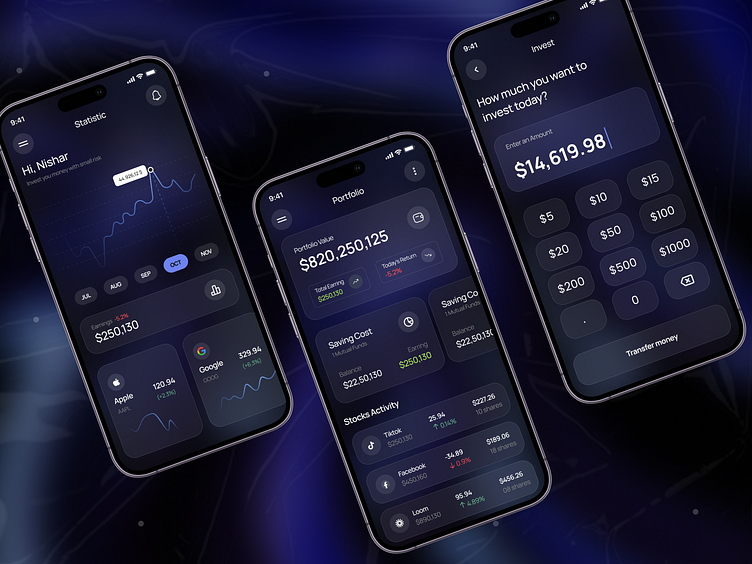
20 PRACTICAL STRATEGIES FOR PICKING A TOP AI STOCK ANALYSIS APP
Top 10 Tips To Evaluate The User Experience And Interface Of Ai Platforms For Trading Stocks
The User Interface (UI) and User Experience (UX) of AI stock predicting/analyzing trading platforms play a critical role in ensuring efficiency, usability, and overall satisfaction. A poorly designed interface can hinder decision-making, even if the core AI models are robust. Here are ten top suggestions to assess the UI/UX on these platforms.
1. Evaluation of intuitiveness and ease of use
Navigation: Make sure the platform is easy to navigate using clearly defined menus, buttons and workflows.
Learning curve: Measure the speed at which an individual is able to master a system and learn to use it without lengthy instruction.
Consistency: Seek out uniform patterns of design (e.g. buttons, color schemes, etc.) across the whole platform.
2. Check for Customizability
Dashboard customization: Check whether the dashboard is customized to display relevant metrics, charts, or data.
Layout flexibility: Ensure that your platform permits you to rearrange widgets, tables and charts.
Themes and preferences: Find out if the platform offers dark/light options or other preferences for visuals.
3. Visualize Data
Quality of the chart: Make sure that the platform has interactive charts that can be zoomed and have panning capabilities (e.g. line charts, candlestick charts).
Visual clarity Check to ensure that all information is presented in a clear manner that includes labels, legends and tip-offs.
Updates in real-time: Make sure that visualizations update in real-time to reflect market trends.
4. Test Speed and Reactivity
Loading Time: Make sure that your platform is loaded quickly, even if you are managing large amounts of data.
Real-time performance: Determine if the platform can handle real-time data feeds without lag or delays.
Cross-device compatibility: Verify if the platform works seamlessly across devices (desktop tablet, mobile).
5. Assess Accessibility
Mobile App: Ensure the platform provides an app for trading on the go that is fully functional.
Keyboard shortcuts: Make sure the platform is able to support keyboard shortcuts for advanced users.
Accessibility features – Make sure that the application is in compliance with accessibility standards.
6. You can sort and search your results.
Search performance: Make sure the platform is able to let users quickly search for indexes, stocks or other assets.
Advanced filters: Discover if there are any filters that could be applied to your results.
Saved searches: Check if the platform allows users to save frequently used searches or filters.
7. Be sure to check for alerts, notifications and Other Information
Customizable alarms: Make sure users have the ability to set up alarms for specific conditions.
Notification Delivery: Examine to see if notifications can be delivered in a variety of ways (e.g. via SMS, email, or app notifications).
Timeliness – Make sure whether alerts are sent out quickly and precisely.
8. Check Integration with other tools
Broker integration: Ensure your broker account is seamlessly integrated to your broker account to facilitate trade execution.
API access: Find out if the platform allows advanced users to design customized tools and workflows.
Third-party platforms: Make sure to determine if your platform is able to integrate with other applications (such as Excel, Google Sheets or trading bots).
9. Evaluate Help and Support Features
Take a look at the onboarding instructions.
Help Center: Check that the platform provides a comprehensive and well-organized help desk.
Customer support: Determine if you can get a quick response via the platform (e.g. via live chat, email, or via the phone).
10. Test User Satisfaction Overall
User feedback Review and testimonials can be used to gauge the overall satisfaction of users with the platform UI/UX.
Trial period – Test the platform in a free trial to test what it can do.
Verify that the error handling is correct.
Bonus Tips
Aesthetics. Functionality is essential but a visually appealing layout can enhance the experience of users.
Performance under pressure Test your platform in highly volatile markets to make sure it’s responsive and stable.
Find out if the platform offers an active user community in which users can exchange feedback and share ideas.
With these suggestions You can easily evaluate the UI/UX of AI trading platforms for stock prediction or analysis and ensure that they are user-friendly, efficient, and suited to your trading needs. The UI/UX of a trading system can significantly impact your ability to make educated trades and take the most effective choices. View the recommended for beginners about stock research for website recommendations including ai investment bot, stock market ai, stock market investing, ai intelligence stocks, investment in share market, ai stock to buy, stock trading, best ai companies to invest in, ai stocks, stock analysis tool and more.
Top 10 Tips On Risk Management Of Ai Trading Platforms That Can Predict Or Analyze The Price Of Stocks.
Risk management plays a vital role in any AI-based platform for trading stocks. It protects your capital by limiting the risk of losses and helps you to maximize profits. A platform that is equipped with powerful tools for risk management can aid in the navigating of the volatile market and enable you to make educated choices. Here are the top ten suggestions for assessing risk management capability of these platforms.
1. Review Stop-Loss and take-profit features
Flexible levels: Ensure that the platform allows you to determine take-profit and stop-loss limits for each trade or strategy.
Check the platform to see if it supports trailing stopped that will automatically adjust in the event that the market changes towards you.
If the platform offers stop-loss order guarantees that your position is closed to the price specified in volatile markets You can be assured of a successful trade.
2. Assessment Position Sizing Instruments
Fixed amount – Ensure you can define the size of your positions relative to a certain amount.
Percentage of portfolio: Determine if you can set the size of your positions as a percentage of your total portfolio to control risk in a proportional manner.
Risk-reward ratio: Verify whether the platform allows setting risk-reward ratios for specific trades or strategies.
3. Look for Diversification Support
Multi-assets trading: Make sure that the platform supports trading across multiple asset categories (e.g. stocks, ETFs options, forex, etc.) to diversify portfolio.
Sector allocation: See whether the platform offers tools for monitoring and managing exposure to sectors.
Diversification in geography. Check to see the platform you use allows you to trade on international markets. This will assist in spreading the risk of geographic.
4. Review margin and leverage controls
Margin requirements: Make sure the platform clearly discloses margin requirements for trading leveraged.
Limits on leverage: See whether the platform permits you to set limits on leverage to control the risk exposure.
Margin calls: Ensure that you receive timely notifications from the platform to ensure that your account is not liquidated.
5. Assessment and reporting of risk
Risk metrics: Make sure the platform has key risk metrics (e.g., Value at Risk (VaR) Sharpe ratio drawdown, Sharpe ratio) for your portfolio.
Evaluation of scenarios: Ensure that the platform you’re using allows you to simulate market scenarios and evaluate the risks.
Performance reports – Make sure that the platform has detailed performance reporting, including the risk-adjusted returns.
6. Check for Real-Time Risk Monitoring
Monitoring of portfolios – Make sure that the platform you select provides real-time monitoring so that your portfolio is protected.
Alerts and notifications. Find out if the platform can provide real-time notification of risk-related events.
Risk dashboards: Check whether the platform provides customizable risk dashboards for an in-depth view of your risk profile.
7. How can you assess the results of Stress Testing and Backtesting
Stress testing: Ensure the platform lets you stress test your strategies or portfolio under the most extreme market conditions.
Backtesting: Verify that the platform supports backtesting strategies using previous data to assess risk and performance.
Monte Carlo Simulations: Check whether the platform uses Monte Carlo simulations in order to model and assess a range possible results.
8. Risk Management Regulations: Assess your compliance
Check for regulatory compliance: Make sure that the platform adheres to the relevant regulations for risk management (e.g. MiFID II, Reg T, in the U.S.).
Best execution: Ensure that the platform follows best execution practices. The trades will be executed at the lowest cost that is possible in order to reduce slippage.
Transparency: Find out whether the platform offers clear and transparent disclosures of risks.
9. Examine for Risks that are User Controlled Parameters
Custom risk rules: Make sure the platform you select lets you create your own custom risk management rules.
Automated risk controls You should check if your platform can implement risk management policies upon the parameters you’ve defined.
Manual overrides – Check to see if your platform permits you to manually override automated risk controls.
Review Case Studies, User Feedback Review Case Studies, User Feedback Case Studies
User reviews: Examine user feedback to determine the platform’s effectiveness at managing risk.
Case studies: Search for examples or testimonials that demonstrate the capabilities of the platform for managing risk.
Community forums. Find out if the platform is a thriving user-based community where traders can exchange strategies for risk management and suggestions.
Bonus Tips
Trial time: You can make use of a demo or a no-cost trial to experience the risk management tools of the platform.
Customer support: Ensure you have a reliable support system for risk management-related concerns or questions.
Educational resources: Find out if you can find any educational materials that cover best practices in managing risk.
If you follow these guidelines, you can effectively assess the potential risk management capabilities of AI platform for analyzing and predicting stocks and ensure you select the one that can to protect your capital and limit possible losses. It is crucial to have robust risk-management tools to be able to navigate volatile markets. View the most popular ai investment tools examples for blog tips including ai stock investing, stock predictor, stock trading ai, trading ai tool, can ai predict stock market, ai in stock market, ai for trading stocks, ai share trading, best ai for stock trading, best ai stocks and more.